Ragdoll Blade
tatsumaki gamesAction
4.4223.00 Reviews
- Version
- 2.2.4
- Installs
- 10.00M
- Age Rating
- Everyone 10+
Screenshots
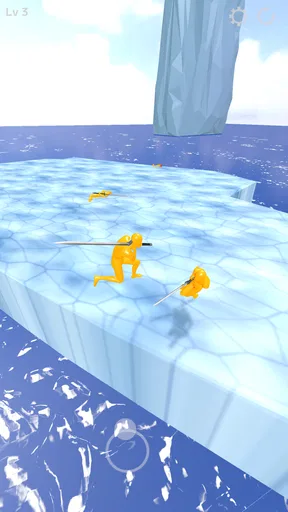
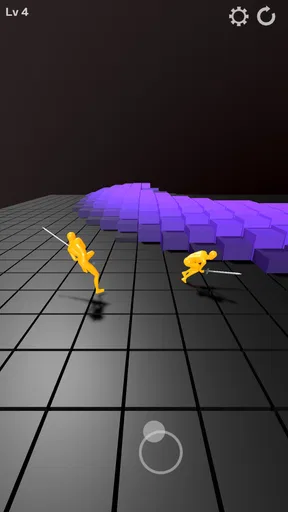
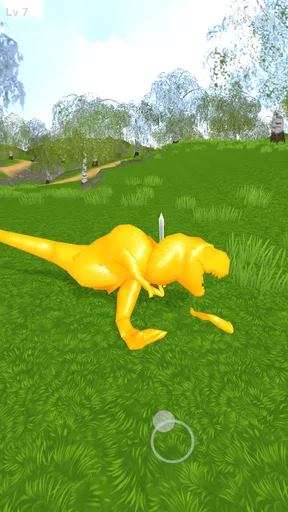
Our Review of Ragdoll Blade
 Analysis by Appyee
I went into Ragdoll Blade expecting a quick action game built around simple cutting, and that is exactly where it makes its strongest impression. It is easy to understand within seconds: enemies appear, I swipe or tap to attack, and the goal is to clear them before they overwhelm the screen. That directness is a real advantage when I want something I can play without learning a long rulebook.
At the same time, the game is not trying to be a large adventure, a deep fighting simulator, or a story-driven campaign. It belongs to the lightweight side of action games, where the pleasure comes from timing, movement, and watching ragdoll enemies react to each hit. I found it most enjoyable in short sessions, especially when I wanted a fast distraction rather than a game that demanded my full evening.
How Ragdoll Blade feels in its current form
The developer, tatsumaki games, has kept the central idea refreshingly clear. The short store description calls it “Ragdoll Blade,” while the broader premise is about cutting through enemies. In practice, that means the appeal depends heavily on the feel of each attack. A swipe needs to feel immediate, readable, and satisfying; otherwise the whole experience becomes a repetitive tapping exercise.
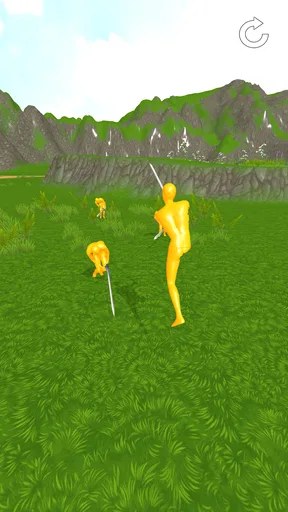
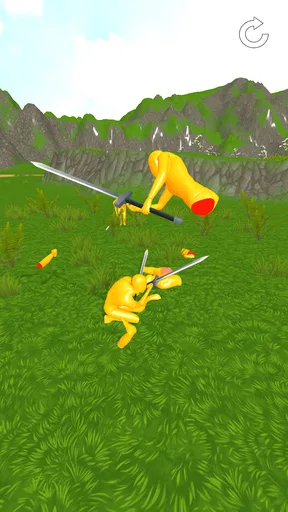
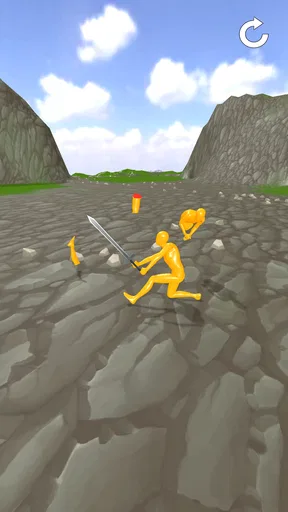
My first useful observation is that the enemies are not just targets to remove. Their ragdoll behavior gives each encounter a little physical comedy. A successful strike can make the action feel more lively than a standard game where opponents simply vanish after taking damage. That visual reaction is important because the basic objective is so simple. Without it, the loop would lose much of its personality very quickly.
The game is free, which makes it easy to try without turning the decision into a purchase. It is also marked for Everyone 10+, so it sits in a fairly accessible space for players who want cartoon-like action rather than a more serious combat presentation. I would still treat the age label as a guide for families, since the game is built around attacking enemies even though its presentation is stylized.
On Android, the stated minimum requirement is version 6.0, so the compatibility range is broad enough for many older devices. That matters for this kind of quick-play title: if I am installing a small action game for a spare device or an older phone, I do not want the hardware requirement to be the first obstacle. The current version is 2.2.4, which gives the game a more established feel than a brand-new release, while its release date of November 17, 2024, places its development in a relatively recent period.
The public response also suggests that the game has found a substantial audience. It has an average rating of 4.1 from around fourteen thousand ratings and has passed ten million installs. I read those numbers as evidence of broad appeal rather than proof that every player will love it. A game with such a simple loop can be very satisfying for one person and too repetitive for another, depending on how much variety that player expects from an action title.
The first minutes are the real test
For me, the opening experience is less about discovering a complicated system and more about deciding whether the physical feedback works. If the attack gesture feels natural, the game can become an enjoyable little reflex habit. If the controls feel imprecise on a particular screen, the simplicity becomes a weakness because there are not many other systems to distract from that friction.
I recommend playing with the phone held comfortably and keeping the screen free of anything that might interfere with swipes. This sounds obvious, but it matters more here than in a menu-heavy game. When the entire challenge is built around reacting to enemies and directing a blade, a cramped grip or an awkward finger position can make a fair encounter feel more difficult than it should.
Another practical tip is to avoid treating every attack as a frantic movement. I had better results when I watched the enemy’s position for a moment and then made a deliberate cut. The ragdoll presentation encourages wild swiping because it looks entertaining, but controlled movement helps me understand what the game is actually asking for. That distinction becomes useful once several enemies occupy the same space.
What the version and release history tell me
The move to version 2.2.4 is the clearest current sign that the game has continued beyond its initial launch. However, I would separate that fact from assumptions about exactly what changed. A version number by itself does not tell me whether a particular update added content, adjusted balance, improved performance, or fixed smaller problems. I would not promise a specific feature based only on the version label.
What I can say from using the current build is that the game’s identity remains focused on its original action idea rather than presenting itself as something radically different. That is a positive choice when the core interaction works. A game like this does not need to bury its best quality under unnecessary menus or a complicated progression structure. Its evolution is more convincing when improvements support the cutting and ragdoll interaction instead of distracting from it.
For someone who played an earlier build, the important question is probably not whether the title has become a completely new game. It is whether the current version feels stable and comfortable enough to return to. I would install the latest available build before judging it, particularly if an older experience involved awkward controls or inconsistent reactions. Current software is the fairest basis for deciding whether the game belongs in a regular rotation.
There is also a useful trade-off here. A focused design can make updates feel less dramatic than they would in a large role-playing game. New players may appreciate that they can understand the premise immediately, while returning players may want more noticeable changes over time. The game’s future appeal will depend on adding freshness without losing the quick, physical character that makes it recognizable.
Who will enjoy it most
I would recommend Ragdoll Blade to someone who likes short bursts of action, tactile gestures, and humorous enemy reactions. It works particularly well for the kind of everyday situation where I have a few minutes to fill: waiting for an appointment, taking a break between tasks, or relaxing after a long day without committing to a long campaign.
One realistic routine is to play with the sound at a comfortable level during a short break, complete a handful of encounters, and stop before the repetition starts to feel noticeable. That approach suits the game better than expecting a full console-style session. Its strength is the low barrier between opening it and doing something active.
It may also suit younger players who enjoy cartoon action but need an experience that is easier to understand than a traditional fighting game. The Everyone 10+ rating is relevant here, although I would still make the final decision based on the individual child’s comfort with combat themes. The game’s straightforward presentation is approachable, but “simple” does not automatically mean appropriate for every family.
I would be more cautious about recommending it to players who need a strong narrative, character development, competitive depth, or a large collection of modes. Those players may get more value from a fighting game with a broader roster, a roguelike with meaningful build choices, or an action adventure with exploration. Ragdoll Blade is better viewed as a focused reflex toy than as a replacement for those larger genres.
Three details that improve the way I play
First, I find it more useful to judge an encounter by control rather than by speed alone. Fast swipes can look impressive, but deliberate cuts make it easier to see which movements are actually effective. This is especially helpful when the screen becomes visually busy and several ragdoll bodies overlap.
Second, I use short sessions as a way to preserve the game’s best quality. Because the main interaction is immediately understandable, the first few rounds can feel very satisfying. Playing continuously for too long can expose the limits of a compact action loop. Stopping while the physical humor is still enjoyable makes it easier to return later without feeling that I have exhausted the idea.
Third, I pay attention to the difference between a funny reaction and a useful reaction. The ragdoll effect adds charm, but it can also make the result of a strike look chaotic. When I focus on where the attack begins and ends instead of only watching the enemy tumble, I get a clearer sense of my own timing. That turns the visual spectacle into feedback rather than mere decoration.
These observations are not advertised as complicated hidden mechanics, and I would not pretend the game becomes a technical combat simulator through practice. They are simply ways to get more value from the system that is already there. The game rewards a player who treats its gestures as deliberate actions, even though its presentation invites playful disorder.
Where the simple design starts to show limits
The same clarity that makes the game approachable also narrows its long-term appeal. Once I understand the basic objective, I need enough variation in encounters or enough improvement in my own skill to keep returning. If neither develops at a satisfying pace, the game can begin to feel like repeating the same gesture with different visual noise.
This is the main limitation I would explain to a friend before recommending it. The game’s store summary is extremely direct, and the experience follows that directness. I would not download it expecting a deep weapon system, a detailed campaign, or a layered social experience. If those are essential to you, a more feature-rich action game will probably be a better use of your storage and attention.
There is also a personal-control issue. Touchscreen action depends on the phone itself: screen size, grip, finger placement, and how clearly I can see the action all influence the experience. A player using a smaller display may feel more cramped during busy moments, while someone with a larger screen may find the gestures easier to read. That is not a flaw unique to this title, but it is more noticeable when cutting is the entire interaction.
The free price removes the biggest financial risk, but it does not remove the cost in time or patience. I still recommend giving it a focused trial rather than assuming that a high install count guarantees a perfect fit. Around ten million installs show that many people have tried it, and the 4.1 average indicates generally positive reception, but neither figure can predict whether you personally enjoy a repetitive reflex loop.
Compared with a conventional fighting game, this is easier to pick up and less demanding in terms of memorizing moves. Compared with a physics-based action game, its appeal is more immediate and less dependent on building a long strategy. Compared with a casual puzzle game, it offers more physical energy but usually less quiet, methodical problem-solving. Those comparisons helped me place it correctly: it is for quick action satisfaction, not for deep planning or extended progression.
What existing players should expect from continued development
Players already familiar with the game should watch for changes that improve the feel of the central gesture. Better responsiveness, clearer visual feedback, and more varied situations would all matter more to me than decorative additions that do not affect play. Since the game’s identity is so concentrated, small improvements to the action can have a larger effect than a long list of superficial extras.
I would also look for whether future versions preserve the immediate readability of encounters. More enemies or more visual effects may sound exciting, but if the screen becomes difficult to interpret, the game could lose the clean relationship between my movement and the result. The best direction would add challenge while still letting me understand why a cut succeeded or failed.
For returning users, the practical approach is simple: update before forming an opinion, then compare how the current build feels during ordinary short sessions. Do not judge progress only by a version number. Notice whether the game is easier to control, whether encounters remain readable, and whether the physical reactions still feel entertaining rather than distracting. Those are the changes that would influence my decision to keep it installed.
New users should not feel pressured to master it immediately. I would spend the first session learning the rhythm of the controls, then decide whether the action feels satisfying enough to revisit. If the basic cutting interaction does not click after that period, additional familiarity is unlikely to transform it into a completely different kind of game.
My final recommendation
Ragdoll Blade succeeds because it does not hide its purpose. It gives me a compact action experience centered on cutting enemies and enjoying their exaggerated physical reactions. The free entry point, broad Android compatibility beginning with version 6.0, and straightforward controls make it easy to test, while the current 2.2.4 build shows that the project has continued beyond its original release.
I would recommend it to players who want a fast, casual action game for spare moments and who enjoy touch controls with a bit of visual comedy. I would skip it if my priority were a story, serious combat depth, long-term character building, or a large variety of activities. The game is not weak because it is focused; it simply asks me to appreciate one interaction rather than offering an entire entertainment package.
My honest verdict is that it is worth trying, especially when I want something immediate and uncomplicated. The key is to approach it on its own terms. Play in short bursts, use controlled gestures instead of constant frantic swiping, and judge the current version by how responsive and readable the action feels on your device. The best reason to keep it installed is the satisfying combination of quick cuts and playful ragdoll reactions, not the promise of a deeper game than it actually is.
Privacy and Permissions
See what permissions an app requests and how it handles your data.
- Wi-Fi connection information
- view Wi-Fi connections
- Other
- view network connections, full network access, control vibration, prevent device from sleeping, Google Play license check
Verdict
Strengths of Ragdoll Blade
- Simple controls make it easy to start playing immediately.
- Physics-based combat creates unpredictable and entertaining moments.
- Short levels suit quick gaming sessions on mobile.
- Weapon upgrades add variety and a sense of progression.
- Bright cartoon visuals are easy to understand on small screens.
Limitations of Ragdoll Blade
- Gameplay can become repetitive after extended play.
- Some challenges rely more on physics randomness than skill.
- Ads may interrupt the experience between stages.
- Limited customization reduces long-term personalization.
- Performance may drop on older or less powerful devices.
Similar Picks in This Category
View All
Temple Run 2: Endless Escape
Imangi Studios4.1

PUBG MOBILE
Level Infinite4.3

Free Fire: 9th Anniversary
GARENA INTERNATIONAL I4.4

Talking Tom: Hero Dash Run
Outfit7 Limited4.3

slither.io
Lowtech Studios3.9

Sniper 3D:Gun Shooting Games
Wildlife Studios4.6
Frequently Asked Questions
What is Ragdoll Blade, and how does the gameplay work?
Ragdoll Blade is a physics-based action game centered on controlling a flexible ragdoll warrior equipped with a blade. You guide attacks, movement, and positioning while trying to defeat opponents and avoid incoming hits. The unpredictable physics make every encounter feel different, since characters can stumble, bounce, and react dramatically to impacts. It is designed for short, entertaining sessions rather than a complex story-driven campaign.
Is Ragdoll Blade free to download and play?
Ragdoll Blade can generally be downloaded without an upfront purchase, but the exact monetization system may depend on the version and platform available on your device. Free games of this type commonly include advertising, optional purchases, or both. Before installing, check the official store listing for details about ads, in-app purchases, and any age or regional restrictions that may apply.
Does Ragdoll Blade require an internet connection?
The core gameplay in Ragdoll Blade is typically suited to offline play, which makes it convenient for quick entertainment when you are traveling or have limited connectivity. However, an internet connection may still be needed for downloading the game, receiving updates, displaying certain advertisements, or accessing online features if they are included in your version. Requirements can vary between Android and iOS releases.
Is Ragdoll Blade suitable for children?
Ragdoll Blade uses cartoon-style combat and exaggerated physics, but it still focuses on sword attacks and characters being hit or defeated. Parents should review the age rating and store description before allowing younger children to play. Advertising, optional purchases, and the level of simulated violence may also be important considerations. Device parental controls can help manage downloads, spending, and play time.
What devices are compatible with Ragdoll Blade, and does it need powerful hardware?
Ragdoll Blade is generally made for modern Android and iOS smartphones and tablets, with compatibility determined by the operating system version and the developer’s current store requirements. Because the game relies on physics simulations and animated ragdolls, older or lower-end devices may experience reduced performance, loading delays, or occasional stuttering. Check the official listing for supported versions and available storage before downloading.
Play our best games!


